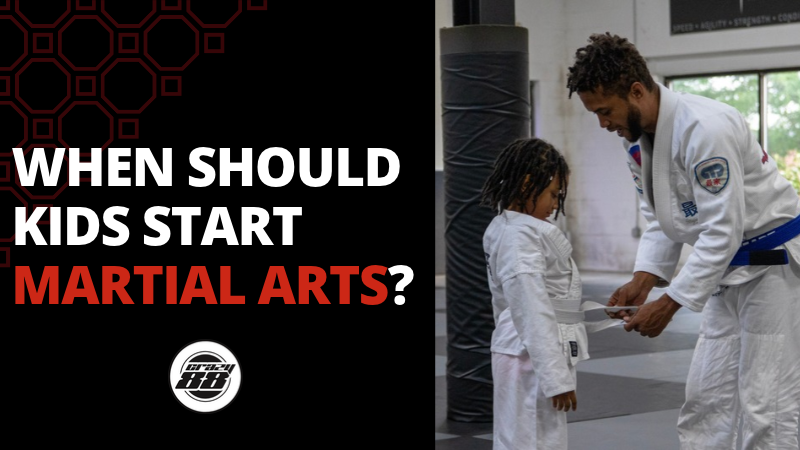
Most children are ready to begin martial arts between ages 4 and 6. At this stage, many can follow multi-step instructions, participate in a group, take turns, and spend 30 to 45 minutes in class without a parent nearby. Younger children, including 3-year-olds, can...
If your goal is to train MMA, the best place to start is grappling. You will eventually need strong striking, but learning how to control an opponent, defend takedowns, escape bad positions, and fight from the ground gives you a foundation that carries into every part...
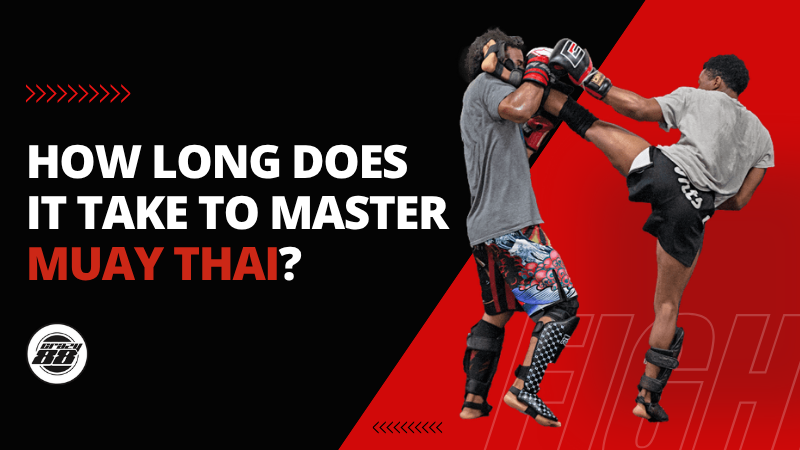
Mastering Muay Thai takes 10 to 15 years, the point where other practitioners come to you for answers. Long before that, students training three times per week reach functional competence with the fundamentals in 12 to 15 months, spar productively at 18 to 24 months,...
Gi and No-Gi Brazilian Jiu-Jitsu teach the same core principles: leverage, position, and control, but Gi and No-Gi involve different strategies and approaches. Gi BJJ is trained in a heavy cotton uniform whose collar, sleeves, and pants become grips, which makes the...
Short answer: Brazilian Jiu-Jitsu has 5 primary adult belts: white, blue, purple, brown, and black. Counting the ranks beyond the black belt, the full IBJJF graduation system reaches 8 belt colors total, adding two coral belts and the red belt. Kids ages 4 to 15...
If you’ve watched UFC fights or spent time in a BJJ academy, you’ve probably noticed fighters with swollen, folded, or misshapen ears. This condition is known as cauliflower ear, and while many people associate it with experienced combat athletes, it is...