

If you’ve watched UFC fights or spent time in a BJJ academy, you’ve probably noticed fighters with swollen, folded, or misshapen ears. This condition is known as cauliflower ear, and while many people associate it with experienced combat athletes, it is not a badge of honor or an unavoidable part of training.
The truth is that cauliflower ear is a preventable injury. Ignoring early swelling doesn’t make you tougher. It simply increases the chances of permanent damage. Whether you’re starting MMA, Brazilian Jiu-Jitsu, wrestling, or Muay Thai, understanding how cauliflower ear develops can help you avoid a lifelong reminder of a treatable injury. This guide explains what cauliflower ear is, why it happens, how it’s treated, and the best ways to prevent it.
Quick Answer: Cauliflower Ear in MMA
According to the Cleveland Clinic, cauliflower ear is a permanent deformity of the outer ear caused by repeated trauma that creates an auricular hematoma (blood collecting between the skin and cartilage). It is most common in MMA, wrestling, Brazilian jiu-jitsu (BJJ), rugby, and boxing. When treated within 24 to 48 hours, permanent damage can often be prevented.
What is Cauliflower Ear?
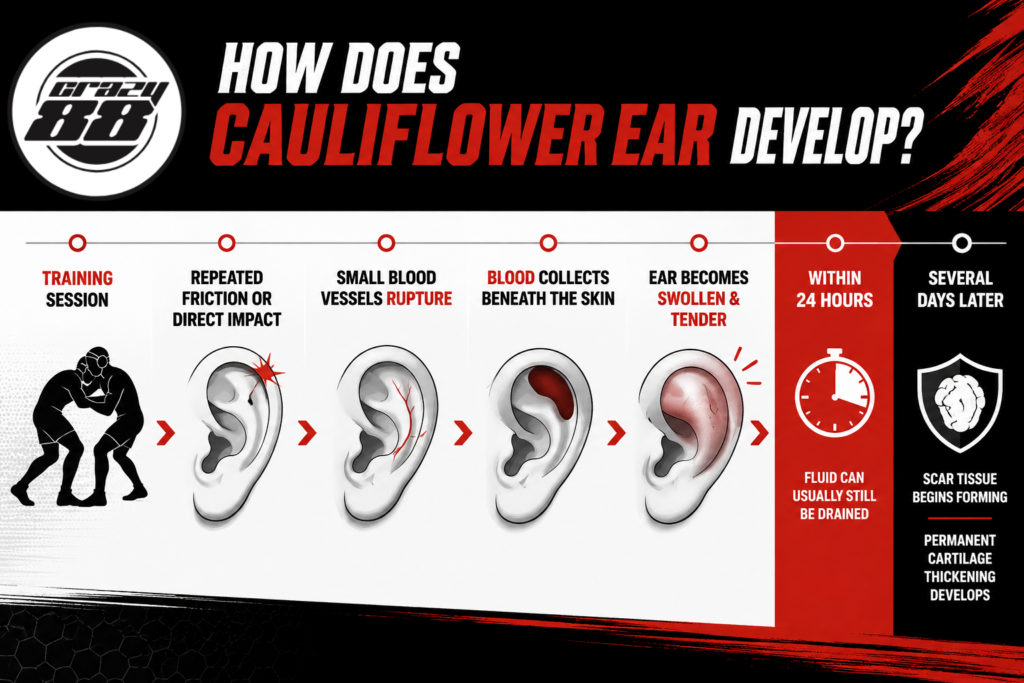
Cauliflower ear develops when repeated trauma or a direct blow damages the small blood vessels that supply the outer ear (also called the pinna). The injury causes blood to collect between the skin and the cartilage, forming what’s known medically as an auricular hematoma. Because cartilage has very little blood supply of its own, it relies on the surrounding tissue for oxygen and nutrients. When blood collects between the skin and cartilage, the supply is interrupted.
Without prompt treatment:
- The trapped blood hardens.
- Scar tissue develops.
- The cartilage thickens and becomes permanently deformed.
- The ear takes on the lumpy appearance that resembles a head of cauliflower.
Once scar tissue forms, the ear usually cannot return to its original shape without reconstructive surgery.
How Does Cauliflower Ear Develop?
Understanding the timeline helps explain why quick treatment matters.
Why Cauliflower Ear is so Common in MMA
Cauliflower ear shows up so consistently in combat sports, especially BJJ, wrestling, and MMA, because the mechanics of these sports often combine striking with grappling, making them among the highest-risk sports for ear trauma.
Repeated Friction During Grappling
In BJJ, athletes grapple head-to-head, which increases the risk of ear injury. BJJ and wrestling constantly place pressure on the ears through:
- Headlocks
- Clinch work
- Guard passing
- Side control
- Turtle position
- Scrambles
The ear repeatedly rubs against training partners, the gi, and the mat.
Direct Blunt Trauma
Punches, elbows, knees, and accidental collisions can all rupture blood vessels inside the ear. Although striking alone causes fewer cases than grappling, MMA athletes experience both mechanisms.
Frequent Training
Experienced grapplers often train four to six days per week. Small injuries that aren’t fully healed continue accumulating until permanent damage occurs.
Ignoring Early Swelling
This is by far the biggest contributor. Many athletes notice swelling but decide they’ll “deal with it later.” Timing is everything; swelling that’s caught within the first 24–48 hours is still reversible. Unfortunately, once the cartilage hardens, treatment becomes much more difficult.
Does Everyone Who Trains MMA Get Cauliflower Ear?
No. Many professional fighters never develop cauliflower ear because they:
- Wear properly fitted grappling headgear
- Treat swelling immediately
- Train with good technique
- Avoid unnecessary grinding pressure
- Seek medical care early
Cauliflower ear is common, but it is not inevitable.
Which Martial Arts Disciplines Have the Highest Risk?
The greatest risk comes from sports involving prolonged ear-to-body contact rather than striking alone.
| Martial Art | Risk Level |
|---|---|
| Wrestling | Very High |
| Brazilian Jiu-Jitsu (BJJ) | Very High |
| Mixed Martial Arts (MMA) | High |
| Judo | High |
| Rugby | Moderate |
| Boxing | Moderate |
| Muay Thai | Low to Moderate |
Key Takeaway: The highest risk of cauliflower ear comes from sports involving prolonged ear-to-body contact, repeated grappling exchanges, and sustained pressure on the outer ear rather than striking alone.
Early Signs of Cauliflower Ear
Recognizing symptoms early gives you the best chance of preventing permanent damage. Watch for:
- Swelling along the outer ear
- Warmth
- Tenderness
- Bruising
- Redness
- A soft or squishy fluid-filled pocket
- Pain while wearing headphones or headgear
Even mild swelling after training deserves attention.
Is Cauliflower Ear Permanent?
It depends entirely on how quickly you act.
Early Stage (First 24-48 Hours)
Blood remains soft and can often be drained successfully. The ear may heal with little or no permanent deformity.
Later Stage
Once scar tissue forms and cartilage thickens, the damage becomes permanent. Reconstructive surgery may improve appearance, but the ear rarely returns to its original shape.
Can Cauliflower Ear Heal on Its Own?
Usually not. While swelling may decrease naturally, the trapped blood often hardens into scar tissue. Without proper drainage and compression, the ear commonly develops a permanent deformity. Waiting rarely improves the outcome.
Is Cauliflower Ear Dangerous?
Cauliflower ear is generally not life-threatening, but untreated injuries can lead to complications, including:
- Infection
- Chronic pain
- Recurrent swelling
- Narrowing of the ear canal
- Partial hearing problems in severe cases
The earlier treatment begins, the lower the risk of complications.
Can Cauliflower Ear Affect Hearing?
Most people experience only cosmetic changes. However, severe deformity can partially block the ear canal, making it more difficult for sound to enter. If hearing changes occur after an ear injury, seek medical evaluation promptly.
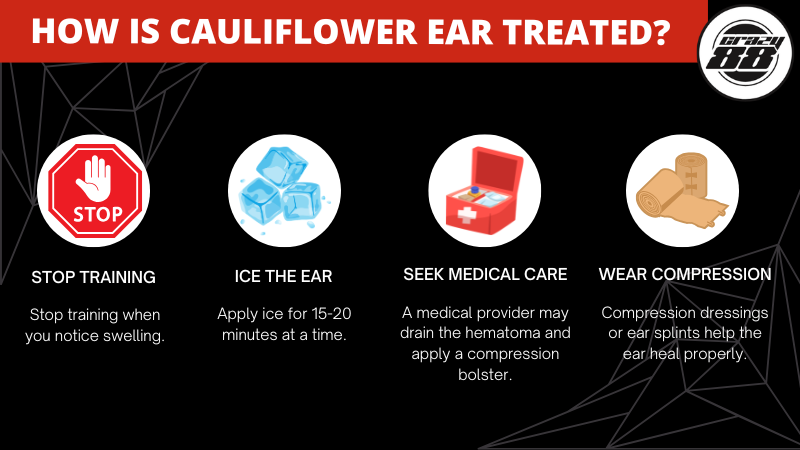
How Is Cauliflower Ear Treated?
If you catch it early, cauliflower ear is treatable. The steps aren’t complicated, but the order and timing matter a lot. Here’s what to do and what to avoid.
Step 1: Stop Training
Stop training when you notice swelling. Continuing to grapple increases bleeding and worsens the injury.
Step 2: Ice the Ear
Apply ice for 15 to 20 minutes at a time to reduce swelling. Avoid placing direct pressure on the injured ear.
Step 3: Seek Medical Care Quickly
A physician may perform:
- Needle aspiration
- Incision and drainage
- Compression bolster placement
These procedures help the skin reattach to the cartilage while preventing blood from returning. Never attempt to drain your own ear at home. DIY drainage significantly increases the risk of infection and permanent damage.
Step 4: Wear Compression
Following drainage, compression dressings or ear splints help prevent blood from collecting again while the ear heals.
Does Headgear Actually Work?
Yes. Properly fitted wrestling or BJJ headgear significantly reduces repeated friction, which is responsible for most cases of cauliflower ear.
Headgear works best when worn consistently during:
- Live sparring
- Wrestling practice
- Grappling drills
- Competition preparation
It cannot prevent every injury, particularly direct strikes, but it substantially lowers overall risk.
How to Prevent Cauliflower Ear in MMA
Most cauliflower ear is preventable. It doesn’t require special equipment or major lifestyle changes, just consistent habits and a training environment that takes injury management seriously.
Wear Protective Headgear During Training
Cauliflower ear prevention starts with wearing high-quality BJJ or MMA headgear. According to the CDC, protective equipment and early injury management help reduce the risk of sports-related injuries. This is especially true for beginners who are still learning how to protect themselves on the mat and for anyone doing heavy grappling rounds. Headgear won’t eliminate risk, but it significantly reduces the friction and impact that start the injury.
Treat Swelling Immediately
Don’t wait until after the training week. If your ear swells on Tuesday, deal with it Tuesday night, not Saturday. The difference between treating it at 12 hours and treating it at 72 hours is often the difference between a reversible and permanent outcome.
Improve Head Position
Controlled grappling intensity matters. You don’t need to grind your ear into your partner’s collarbone to get better at BJJ. Work on technique, position, and movement rather than brute-force pressure. The athletes who last longest in this sport are the ones who train intelligently over time.
Tap Early
The trick is to minimize excessive friction and grinding against the mat or opponent. This requires learning correct head positioning to avoid unnecessary trauma to the ear. Ego-driven training, refusing to tap, grinding through positions to avoid giving up points, creates unnecessary ear trauma along with everything else.
Train at a Gym That Prioritizes Safety
Good gyms teach prevention. If your gym normalizes ignoring injuries as a badge of toughness, find a better gym. At Crazy 88 MMA, we believe long, healthy training careers beat short, reckless ones.
When Should You See a Doctor?
An ENT specialist can determine whether drainage is necessary to prevent permanent cartilage damage. Seek medical attention if you experience:
- Ear swelling after training
- A fluid-filled lump
- Increasing pain
- Repeated swelling
- Redness or signs of infection
- Changes in hearing
Early treatment offers the best chance of preventing permanent deformity.
Why Some Fighters Accept Cauliflower Ear
Many experienced wrestlers, MMA fighters, and BJJ practitioners view cauliflower ear as evidence of years spent training. While some athletes choose not to treat it, that’s an informed personal decision. Beginners shouldn’t mistake permanent injury for a rite of passage. Modern coaching emphasizes longevity, injury prevention, and smart training. Protecting your body allows you to stay on the mats for years rather than months.
Train Smarter, Train Longer at Crazy 88 MMA
The biggest misconception about cauliflower ear is that it’s inevitable. It isn’t. Thousands of martial artists train for years without developing permanent ear damage because they wear protective equipment, recognize early warning signs, and seek prompt treatment when injuries occur.
At Crazy 88, we teach more than techniques. We teach students how to train safely for the long term. From proper head positioning to injury prevention strategies, our coaches help beginners build smart habits from day one. If you’re ready to start MMA, Brazilian Jiu-Jitsu, or Muay Thai in Maryland, visit one of our Elkridge, Owings Mills, or Severna Park locations and take advantage of our 7-day free trial. Learn from experienced instructors who believe that the best martial artists are the ones who can keep training for years to come.
Frequently Asked Questions
Is cauliflower ear more common in MMA or BJJ?
Cauliflower ear is generally more common in Brazilian Jiu-Jitsu and wrestling than in MMA because grappling involves prolonged pressure and friction against the ears. While MMA athletes can develop cauliflower ear from both striking and grappling, dedicated grapplers typically have the highest risk due to frequent clinching, takedowns, and ground fighting.
Can cauliflower ear happen after just one training session?
Yes. Although it usually develops after repeated trauma, a single hard sparring session or wrestling practice can cause an auricular hematoma if the ear experiences enough force. Treating swelling immediately can help prevent permanent damage.
Why don’t all professional MMA fighters have cauliflower ear?
Not every fighter develops cauliflower ear because training habits, genetics, and injury management vary. Many professional athletes wear protective headgear during grappling practice, seek prompt medical treatment for ear injuries, and use proper technique to reduce unnecessary pressure on their ears.
Can cauliflower ear come back after treatment?
Yes. Fluid can reaccumulate if the ear isn’t properly compressed after drainage or if an athlete returns to training too soon. Following your healthcare provider’s aftercare instructions and allowing the ear to heal fully can reduce the risk of recurrence.