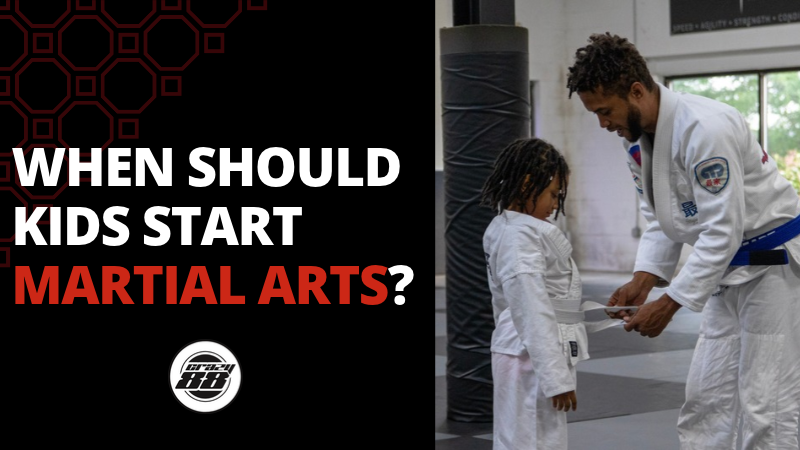
Most children are ready to begin martial arts between ages 4 and 6. At this stage, many can follow multi-step instructions, participate in a group, take turns, and spend 30 to 45 minutes in class without a parent nearby. Younger children, including 3-year-olds, can enjoy play-based introductory classes, while older beginners, even those 10 or 11 and up, can often pick up skills and make progress quickly.
“Is my child old enough?” is one of the most common questions we hear from parents who contact our Elkridge, Owings Mills, and Severna Park gyms. The other is just as common: “Is my 11-year-old too old to start?”
Readiness depends less on a birthday and more on a child’s development, interests, and ability to participate in a group class. We’ve taught martial arts to Maryland kids since 2005, and we’ve seen children thrive at many different starting ages. A 4-year-old in an age-appropriate program can have a great time learning through movement and play. Put that same child in a class built for 9-year-olds, and they will likely struggle to keep up.
This guide covers how to tell when your child is ready, what martial arts classes look like at each age, what pediatric research says about safety, and what to look for when comparing kids’ martial arts programs in Central Maryland.
What Is the Best Age for Kids to Start Martial Arts?
The best age for kids to start martial arts is whenever they’re developmentally ready, and for most children that lands between ages 4 and 6. Readiness matters more than age because a martial arts class asks kids to do things that show up at different times for different kids, such as listen to a coach they just met, wait their turn, remember a three-part instruction, and keep trying after they get something wrong.
By age 4 to 6, most kids can handle all of that for a full class. That’s why it’s the most common starting window at Crazy 88, and why our flagship kids program, Little Ninjas, begins at age 5.
Younger kids can start, too. Our Tiny Ninjas classes welcome 3- and 4-year-olds with a play-based format built around listening, balance, and coordination rather than formal technique. On the other end, kids who start at 10, 12, or even 14 often move faster than kids who started at 5, because they bring more focus and body control to every class.
The short answer: ages 4 to 6 are the sweet spot, age 3 works in the right class, and there’s no age where it’s too late to start.
Signs Your Child Is Ready for Martial Arts
How your child acts at home and at school tells you more than their age. If you can check off most of these, they’re probably ready for a beginner kids’ martial arts class:
- Follows 2- to 3-step directions: “Grab your shoes, put them by the door, and wash your hands” gets done without you repeating it three times.
- Separates from you for 30 to 45 minutes: Drop-off at preschool, school, or a friend’s house goes reasonably well, even if the first few minutes are bumpy.
- Handles correction without shutting down: When a teacher says “try it this way,” your child adjusts instead of getting upset or walking away.
- Has basic coordination: They can run, jump with both feet, and balance on one foot for a few seconds.
- Takes turns in a group: They can wait in line or play a simple game without needing to go first every time.
- Shows a willingness to try: They don’t need to be excited. “Okay, I’ll try it” is plenty.
Few kids check every box on day one, and that’s normal. A few solid checks plus a willingness to try is usually enough for a trial class. Our coaches watch how your child does during the first week and place them in the right group.
What If My Child Isn’t Ready for Martial Arts Yet?
If your child isn’t ready, wait 3 to 6 months and try again. Readiness arrives quickly at this age, and a few months can make a real difference in attention span and comfort with separation. A child who starts at 5 with enthusiasm will almost always pass one who was pushed in at 3 and spent every class in tears.
If you’re on the fence, test it before you commit. Bring your child to watch a class first (parents are always welcome to watch at Crazy 88) or use our free 7-day trial to see how they handle a few sessions. Some families start with a handful of private lessons, which our coaches offer for younger students who aren’t quite ready for a group setting.
What Do Kids Learn in Martial Arts at Each Age?
A martial arts class for a 3-year-old and one for a 13-year-old have almost nothing in common. Here’s what to expect at each stage and how it lines up with our kids programs in Howard County, Baltimore County, and Anne Arundel County.
Ages 3 to 4: Play-Based Foundations
At ages 3 and 4, martial arts is about learning how to be in a class, not learning how to fight. In our Tiny Ninjas program, coaches use games and short movement drills to build listening skills, balance, and gross motor control. Kids practice following directions, taking turns, and staying with a group, all in activities that feel like play. For many families, Tiny Ninjas is a child’s first structured activity outside the home.
Ages 5 to 7: The Most Popular Starting Window
Ages 5 to 7 is when most kids start martial arts, and it’s when real technique begins. Little Ninjas, our program for ages 5 to 8, introduces stances, basic strikes and kicks, footwork, and early grappling drawn from kickboxing, Muay Thai, and Brazilian Jiu-Jitsu, plus simple self-defense and awareness lessons. A clear belt system gives kids goals they can see, and belt tests quickly become milestones the whole family remembers.
Ages 8 to 12: Real Technique and Partner Work
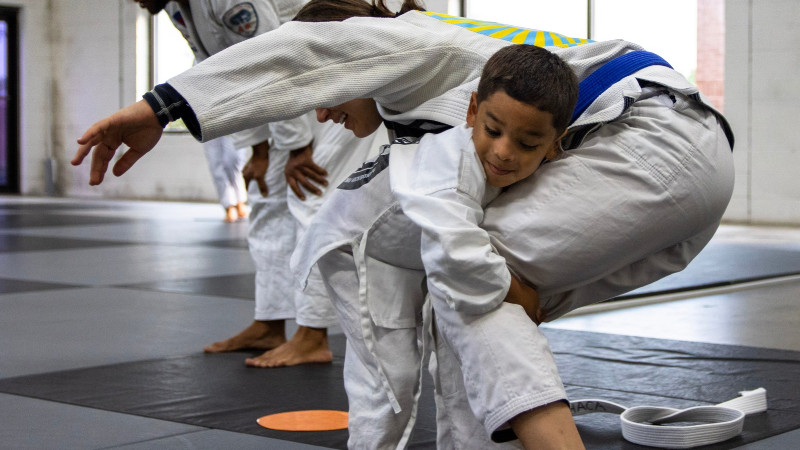
From 8 to 12, kids are ready for more detail, longer drills, and supervised partner work. They can understand leverage, timing, and position, so classes shift from games toward building real skill. Eight-year-olds wrap up Little Ninjas, and at 9, kids move into our Juniors program, which adds structured combinations, partner drills, and more physical challenge. This is also when many kids find a favorite, whether that’s grappling in Kids Jiu-Jitsu or striking in Kids Muay Thai. Kids ages 9 to 15 who want to compete can also join our Jiu-Jitsu competition team.
Ages 13 and Up: Teen Training
Teenagers can start from zero and still train at a high level. Our Junior and Teen martial arts program covers Brazilian Jiu-Jitsu (Gi and No-Gi), Muay Thai kickboxing, boxing, and MMA fundamentals, and plenty of teens cross-train in two disciplines. Training gets more athletic, with more conditioning, more live drilling, and controlled sparring that’s supervised and matched to each student’s skill level. For a lot of teens, the gym becomes a friend group built around effort instead of screens.
Kids Martial Arts Programs By Age at Crazy 88
| Age | Crazy 88 Program | What Class Focuses On |
|---|---|---|
| 3 to 4 | Tiny Ninjas | Listening, balance, coordination, and taking turns through play |
| 5 to 7 | Little Ninjas (ages 5 to 8) | Stances, basic strikes and kicks, early grappling, belt progression |
| 8 to 12 | Little Ninjas, then Juniors (ages 9 to 13) | Detailed technique, combinations, supervised partner drills |
| 13+ | Juniors, then Teens (ages 14 to 17) | BJJ, Muay Thai, boxing, and MMA fundamentals; controlled sparring |
Is It Too Late to Start Martial Arts at 10, 12, or Older?
No. It’s not too late to start martial arts at 10, 12, or even 15, and older beginners often progress faster than kids who started at 5. Parents worry their child will be “behind,” but several things work in an older beginner’s favor:
- They learn faster per class: A 10-year-old can pick up in one session what takes a 5-year-old several weeks, because coaches spend less time managing attention and more time teaching.
- They already move well: Kids who’ve played soccer, wrestled, swum, or danced bring balance, coordination, and strength that transfer straight to the mat.
- They chose it: Older beginners usually start because they want to, not because a parent signed them up. That motivation keeps kids coming back after the first month.
- They train with peers: Our classes are grouped by age, so a new 11-year-old trains alongside other 9- to 13-year-olds, not in a room full of kindergartners.
If your child is starting later, pick a school that treats beginners like beginners at every age. A good coach meets an older beginner where they are and builds from there.
Is Martial Arts Safe for Young Kids?
Yes. Martial arts is safe for young kids when classes are age-appropriate, closely supervised, and taught by coaches who know how children learn. The American Academy of Pediatrics (AAP) reached the same conclusion in its clinical report, Youth Participation and Injury Risk in Martial Arts, published in Pediatrics in December 2016. Here’s what pediatricians are told to look for, in plain terms:
- Instructors matter: Kids should train only in classes supervised by appropriately trained instructors.
- Contact should wait: Sparring and competition should be delayed until a child shows physical and emotional maturity and is competent with noncontact technique.
- Some activities carry more risk: The AAP strongly discourages youth participation in practices common in mixed martial arts competition, such as direct blows to the head, repetitive head thrusts to the floor, and choking movements.
- Headgear isn’t a fix: Soft headgear has not been shown to reduce concussion risk. The report instead encourages better defensive blocking and strict enforcement of rules against excessive force.
More recent research points the same way. A 2025 review, Primary Care Considerations for Youth Martial Arts Athletes, in Current Reviews in Musculoskeletal Medicine, found the most common youth martial arts injuries are skin and soft tissue injuries such as scrapes and cuts, with more severe injuries concentrated in competition.
How Crazy 88 Keeps Kids Classes Safe
Here’s how those principles show up in our kids classes in Elkridge, Owings Mills, and Severna Park:
- When sparring starts: Our youngest students don’t spar. In Tiny Ninjas and Little Ninjas, partner work is cooperative and drill-based. Controlled sparring is introduced gradually in older groups, and only after a student shows solid technique and the maturity to train with control.
- How head contact is handled: Kids striking classes are built around pads, bags, and technique, with defense taught from the first class. In grappling, kids learn to tap early, partners let go immediately, and submissions are taught step by step under a coach’s eye.
- How chokes and submissions are taught: In grappling, kids learn to tap early, partners let go immediately, and submissions are taught step by step under a coach’s eye.
- Supervision ratios: We keep kids’ classes small so every child gets real attention, and all of our coaches are experienced with children and background-checked.
- Recognized standards: Crazy 88 is an IBJJF-affiliated academy, so our Jiu-Jitsu curriculum and belt promotions follow internationally recognized standards.
- Mats and equipment: All three locations are clean, well-maintained, and fully matted. As kids move into striking and sparring, we’ll walk you through any protective gear they need.
Which Martial Art Is Best for Kids by Age?
For young kids, the quality of the class matters more than the style. As kids get older, their personality and goals start pointing toward one discipline. Here’s how the programs we teach in Central Maryland tend to fit:
- Multi-discipline classes (ages 3 to 8): For the youngest kids, our Tiny Ninjas and Little Ninjas programs blend striking, grappling, and movement so kids get a taste of everything before they pick a favorite. This is the right starting point for most children under 8.
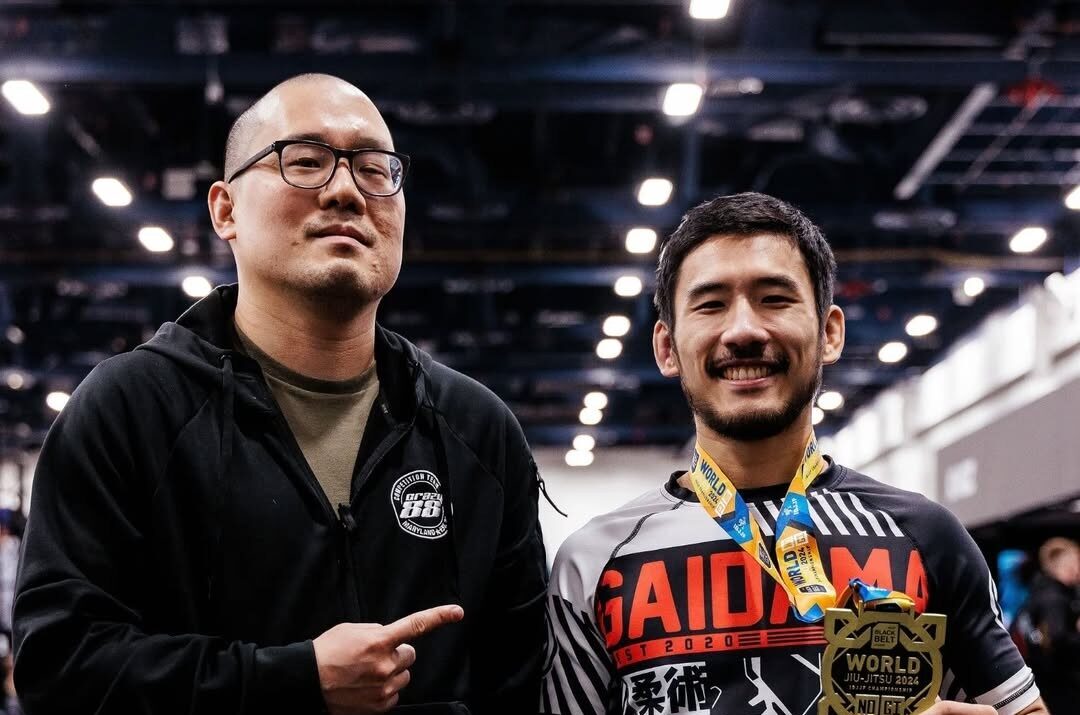
- Brazilian Jiu-Jitsu: BJJ is a great fit for problem-solvers, kids who love to wrestle around, and kids who aren’t drawn to punching and kicking. It teaches how to control a situation without striking, which makes it one of the best options for bullying prevention. It’s also our deepest competition pathway: at the 2026 IBJJF Pan Kids Championship, our youth team brought home the most medals of any Maryland academy.
- Muay Thai and kickboxing: High-energy kids who need to burn off steam usually love striking. Our Kids Muay Thai and kickboxing classes teach punches, kicks, footwork, and coordination on pads and bags, with respect and control built into every drill.
- Boxing: Boxing suits older kids and teens who like a focused, technical discipline. It builds footwork, head movement, and conditioning, and it’s part of our Junior and Teen program.
- MMA fundamentals: Teens who want the full picture can train MMA fundamentals, which combine BJJ, Muay Thai, and boxing into one system. It’s a natural next step for kids who’ve already built a base in one discipline.
What Are the Benefits of Starting Martial Arts Early?
Parents usually sign up for fitness and stay for everything else. The biggest benefits of starting kids martial arts early include:
- Focus: Class asks kids to listen, watch, and repeat, a skill that carries straight into the classroom.
- Confidence: Every new belt, stripe, or clean technique is proof your child can do hard things.
- Self-control: Kids learn to manage their bodies and emotions, even when they’re tired or frustrated.
- Fitness: The CDC recommends that kids ages 6 to 17 get 60 minutes or more of moderate-to-vigorous activity every day, and that kids 3 to 5 stay active throughout the day. One martial arts class covers a big share of that.
- Bullying prevention: Kids who carry themselves with confidence are less likely to be targeted, and the 2025 Current Reviews in Musculoskeletal Medicine review links martial arts training to fewer bullying behaviors in school-aged children.
What to Look for in a Kids Martial Arts Program
Not every kids’ martial arts program in Maryland is built the same. Use this checklist when you visit a school:
| Green Flags | Red Flags |
|---|---|
| Classes grouped by age and development | Formal, line-drill classes for 3-year-olds |
| Coaches experienced with kids and background-checked | One class mixing 4-year-olds and 12-year-olds |
| Clear progression with belts, stripes, or skill milestones | Sparring for brand-new or very young students |
| Contact introduced gradually and always supervised | Pressure to sign a long contract before a trial |
| Parents welcome to watch any class | Parents not allowed to observe |
| Clean, padded, well-kept training space | Coaches who yell, shame, or single kids out |
| Free trial or observation before you commit | Pushing young kids to compete before they’re ready |
How Crazy 88 measures up: Our classes are grouped by age from 3 to 17, taught by coaches who specialize in working with kids, and built on a belt system that gives children visible goals. Parents are always welcome on the sidelines, and every family starts with a free 7-day trial with no contract and no commitment.
What Happens at Your Child’s First Martial Arts Class?
Knowing what to expect makes the first class easier for kids and parents alike. Here’s how a first visit to Crazy 88 works:
- What to wear: Comfortable athletic clothes, like a T-shirt and shorts or athletic pants, and bring a water bottle. If your child joins, we’ll guide you on uniforms and gear for their program.
- How long class runs: Classes for our youngest students are shorter, and class length grows with age. Plan to arrive about 10 to 15 minutes early so your child can get comfortable.
- Whether parents watch: You’re always welcome to watch, and for a nervous first-timer, seeing you nearby helps.
- What the coach does: Your child’s instructor will meet them before class, explain what’s going to happen, and make sure they’re in the right group for their age. Coaches ease new students into drills and keep the first class low-pressure. Afterward, we’ll check in with you about how it went and which classes fit your schedule.
Kids Martial Arts in Maryland at Crazy 88
The right time for your child to start martial arts is when they’re ready, and for most kids that’s between 4 and 6. Kids as young as 3 can thrive in a play-based class, and kids who start at 10 or older can catch up to and pass kids who started early. What matters most is a program built for your child’s age, with coaches who put safety and growth first.
Crazy 88 has helped families across Central Maryland raise confident, disciplined kids since 2005. Whether you’re in Elkridge, Columbia, or Ellicott City; Owings Mills, Pikesville, or Reisterstown; or Severna Park, Arnold, or Annapolis, there’s a Crazy 88 close to home. We also offer an after-school program in Owings Mills and a kids martial arts summer camp.
Try kids martial arts free for 7 days. No contract, no commitment. Your child meets their coach, tries real classes, and you see the Crazy 88 difference for yourself. Claim your free 7-day trial.
- Crazy 88 Elkridge (Howard County)
- Crazy 88 Owings Mills (Baltimore County)
- Crazy 88 Severna Park (Anne Arundel County)
Want the details first? Download our free Programs & Pricing Guide or explore all of our kids martial arts classes in Maryland.
Frequently Asked Questions (FAQs)
Is 4 too young for martial arts?
No, as long as the class is built for 4-year-olds. At that age, a good program looks like structured play with martial arts woven in, not a scaled-down adult class. Crazy 88’s Tiny Ninjas program is designed for ages 3 and 4, and most 4-year-olds who can follow simple directions and separate from a parent for a short class do great.
Can a 3-year-old do martial arts?
Yes, in a play-based class designed for preschoolers. Three-year-olds aren’t learning formal technique. They’re building listening skills, balance, coordination, and comfort in a group. If your 3-year-old struggles to separate from you or follow simple directions, waiting three to six months and trying again is completely normal.
Does my child need to be athletic to start martial arts?
No. Martial arts builds coordination, strength, and balance, so kids don’t need them on day one. Beginner classes start with basic movement and stances, and coaches adjust drills to each child’s level. Many kids who struggled in team sports find their fit on the mat because progress is measured against themselves, not a scoreboard.
Will martial arts make my child aggressive?
No. A well-run program teaches the opposite: self-control, respect for training partners, and when not to use physical skills. Kids who know they can handle themselves usually feel less need to prove it, and parents often tell us their kids come home calmer and more focused.
How many times a week should kids train martial arts?
Most kids do well starting with two classes a week, and many Crazy 88 families settle into two to three classes per week for steady progress. Younger children can start with one or two classes while they get used to the routine. Consistency matters more than volume.
How much do kids martial arts classes cost in Maryland?
Pricing depends on the program, how often your child trains, and which location you choose. Crazy 88’s free Programs & Pricing Guide includes a full tuition breakdown, and every new family can try classes free for seven days before deciding.
Can kids with ADHD or shy kids benefit from martial arts?
Many do. Martial arts gives kids clear structure, short instructions, lots of movement, and steady positive feedback, which can help kids who struggle to focus. Shy kids often open up in small, age-grouped classes where everyone is learning together. Let the coach know about your child’s needs before the first class and talk with your pediatrician about how martial arts fits alongside any care your child already receives.
Related Articles