
The best way to start MMA is to join a beginner class at a gym that teaches both striking and grappling, then train two to three times a week. You don’t need experience or a fitness base. Most beginners are comfortable with the fundamentals within three months. If you want to compete, the typical path is grappling or kickboxing events first, a first amateur MMA fight after 12 to 24 months, and a pro debut after several years and a solid amateur record.
This guide covers every stage, from your first class to getting noticed by the UFC, including what gear to buy, how often to train, and how licensing works for fighters in Maryland.
What Is an MMA Fighter?
An MMA fighter competes in mixed martial arts, a full-contact combat sport that combines striking with grappling. Striking includes punches, kicks, knees, and elbows. Grappling includes takedowns, clinch work, ground control, and submissions like chokes and joint locks.
A fight can end three ways: by knockout or technical knockout, by submission when an opponent taps out, or by a judges’ decision. Fighters compete in weight classes and must make weight the day before the fight.
Because a fight can happen standing, against the cage, or on the ground, complete fighters train several disciplines. Most build their game from four:
- Brazilian Jiu-Jitsu for ground control and submissions
- Muay Thai for kicks, knees, elbows, and clinch striking
- Wrestling for takedowns and takedown defense
- Boxing for hands, footwork, and head movement
How to Start MMA as a Beginner
Step 1: Find an MMA Gym With Beginner Classes
The gym you choose matters more than anything else in your first year. Look for:
- Dedicated beginner or fundamentals classes, separate from advanced training
- Coaches who compete or corner fighters, so what they teach works under pressure
- Instruction in both striking and grappling, not just one
- No hard sparring for new students until you’ve learned to protect yourself
- An active competition team, which is a sign the coaching is proven
Be cautious of gyms that put beginners into live sparring in the first week. Early injuries are the most common reason new students quit.
Step 2: Take a Free Trial Class
Most quality gyms offer a trial. Use it to judge the coaching, the class structure, and whether experienced students help newcomers. Crazy 88 offers a free 7-day trial at all three Maryland locations.
Step 3: Learn Striking and Grappling Together
Beginners often pick one side and avoid the other. That creates gaps that are hard to fix later. Start in MMA classes to learn how striking and grappling connect, then add Brazilian Jiu-Jitsu or Muay Thai to go deeper in each.
Step 4: Commit to 90 Days
The first month is the hardest: new movements, new soreness, new terminology. By month three, most students know the basic positions, can throw clean combinations, and understand how classes flow. Treat the first 90 days as your foundation, not a test of whether you’re good at it.
What to Expect in Your First MMA Class
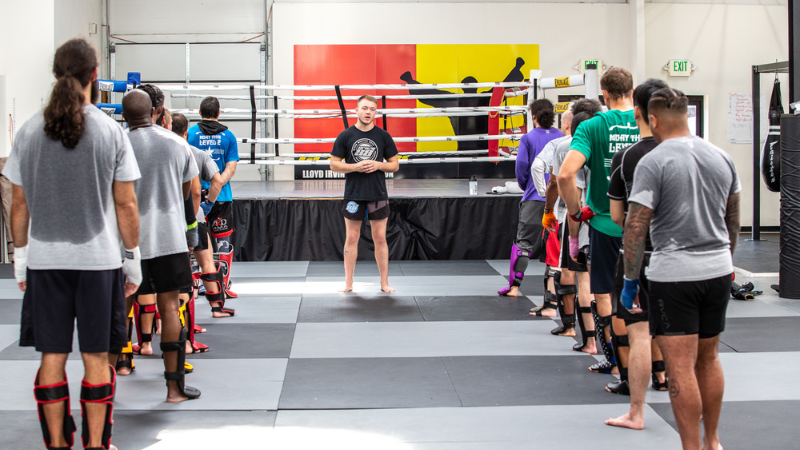
A beginner MMA class follows a consistent structure:
- Warm-up: movement drills, light conditioning, and mobility
- Technique instruction: the coach demonstrates one to three techniques, such as a jab-cross combination or a basic takedown
- Partner drilling: you practice the technique with a partner at controlled speed
- Positional work or pad rounds: light, structured practice, not sparring
What Gear Do You Need to Start MMA?
You don’t need a full kit on day one. Here’s what Crazy 88 asks new students to bring, and what to add as you progress:
| When | What You Need | Why |
|---|---|---|
| First class | T-shirt and athletic shorts, plus optional spandex or compression shorts underneath | Comfortable, flexible clothing for striking and movement drills |
| Striking classes (boxing, Muay Thai) | 16 oz gloves and hand wraps | Protects your hands and wrists during pad and bag work |
| As you progress | Mouthguard, shin guards, groin protection | Needed once you start partner kicking drills and live training |
| Before sparring | MMA gloves, headgear, and a BJJ gi if you train gi classes | Required for live MMA and grappling training |
New student discount: gloves and hand wraps are available for purchase at Crazy 88 at a 25% discount for prospective students, so you don’t need to buy them before your first class.
How Much Do MMA Classes Cost?
Most MMA gyms charge a monthly membership rather than per class. Price depends on how many classes you take, whether you add programs like BJJ or private lessons, and whether you choose a family plan. At Crazy 88 MMA, our packages begin at $135 and vary by location and number of classes you include. To see more about our pricing, download the free Starter Kit, which includes the full tuition guide.
How to Get Into MMA Fighting
Most fighters don’t jump straight into an MMA bout. They build competition experience in stages, each with less risk than the next.
Smokers and In-House Sparring Events
A smoker is an informal sparring event, usually held between gyms or within one gym, where students test their skills in front of teammates and coaches. It’s the first time many students feel adrenaline in a competitive setting.
Grappling Tournaments and Amateur Kickboxing
BJJ and submission grappling tournaments let you compete safely and often. Amateur kickboxing and Muay Thai bouts add striking under pressure. Both teach you to manage a weigh-in, warm up on a schedule, and perform when nervous. Many coaches want to see this experience before approving an MMA bout.
Your First Amateur MMA Fight
Amateur MMA is regulated. The Maryland State Athletic Commission regulates both amateur and professional MMA in the state, and sole jurisdiction over amateur MMA events moved to the Maryland State Athletic Commission in 2013. The commission lists American Amateur Mixed Martial Arts (AAMMA) as an approved organization to supervise amateur MMA in Maryland.
Expect medical exams and bloodwork before you’re cleared, plus amateur rules that are often modified from pro rules, such as restrictions on certain strikes. Your coach should manage your matchmaking. Taking the right first opponent matters more than taking the first offer.
How Long Does It Take to Become an MMA Fighter?
| Stage | Typical Timeline | Milestone |
|---|---|---|
| Fundamentals | 0 to 6 months | Basic striking, takedowns, and positions |
| Sparring base | 6 to 12 months | Controlled sparring and fight conditioning |
| First competitions | 6 to 18 months | Grappling tournaments, smokers, amateur kickboxing |
| Amateur MMA | 12 to 24 months onward | First amateur fights and a growing record |
| Pro debut | 3 to 5 years | First professional fight |
Timelines vary with athletic background. Former wrestlers and collegiate athletes often move faster.
How to Become an MMA Fighter: From Amateur to Pro
Build a Strong Amateur Record
Your amateur record is your resume. Most fighters take several amateur bouts before turning pro, and there’s no advantage to rushing. A pro loss stays on your record permanently, while amateur experience builds the skills to avoid those losses.
Turning Pro in Maryland
To fight professionally in Maryland, you need a contestant license. Applicants must be at least 18 and not more than 36 years old, though the commission can license an older applicant after reviewing their physical condition. A manager, trainer, or qualified individual must certify that you’re physically competent and trained, and you must present a current National MMA Identification Card at the weigh-in.
Build Your Pro Record on Regional Cards
New pros fight on regional promotions, where win streaks and regional titles build visibility. Regional pay is modest, and most fighters keep a job during this stage. This is also when many fighters sign with a manager who negotiates bouts and contracts.
For weight management as you move up, see our guide on how to cut weight for MMA.
How to Become a UFC Fighter
The UFC doesn’t accept applications or highlight tapes. Fighters are signed based on their records and performances, usually through one of these paths:
- Dana White’s Contender Series: a showcase event where prospects fight for a UFC contract
- A regional championship: holding a title in a respected regional promotion puts you on the UFC’s radar
- A short-notice replacement: fighters with strong records sometimes debut by stepping in when a scheduled fighter withdraws
- Management relationships: a manager with promotion contacts helps get you considered, but your record does the work
How Much Do UFC Fighters Make?
UFC contracts use a show-and-win structure: a fighter earns show money for competing and matching win money for a victory. Since 2015, the standard entry-level UFC contract has been $10,000 to show and $10,000 to win. A UFC executive has said 12/12 contracts are for fighters who make their debut on short notice.
Take-home pay is much lower than the headline number. Fighters pay a portion of their purse to managers, cover training partners, coaches, and gym fees, and pay taxes. Pay rises significantly for ranked fighters and champions, but almost everyone starts at the entry level.
Is It Too Late to Start MMA?
For training, it’s never too late. Many Crazy 88 members start in their 30s, 40s, and 50s for fitness, self-defense, and stress relief, and coaches scale intensity for every level.
For a professional career, most fighters start competing in their late teens or twenties. Maryland’s pro license has an upper age limit of 36 unless the commission approves an older applicant, so anyone starting later with pro goals should plan a realistic timeline with their coach.
Start MMA at Crazy 88 in Maryland
Crazy 88 has trained Maryland martial artists since 2005. Our coaches are active competitors, and our competition team gives students who want to fight a clear path. Most members never compete, and they get the same coaching.
Train at our Elkridge, Owings Mills, or Severna Park location. Claim your free 7-day trial and take your first MMA class this week.
Frequently Asked Questions
Can I start MMA with no experience?
Yes. Most people who start MMA have no martial arts experience. Beginner classes teach fundamentals step by step before any live sparring.
What should I bring to my first MMA class?
A t-shirt and athletic shorts, with optional compression shorts underneath. For striking classes, you’ll need 16 oz gloves and hand wraps, which Crazy 88 sells at a 25% discount for prospective students.
How long does it take to become an MMA fighter?
Most fighters take their first amateur fight after 12 to 24 months of consistent training and turn pro after three to five years.
How do you get into the UFC?
Build a strong pro record on regional promotions, then earn a contract through a regional title, Dana White’s Contender Series, or a short-notice opportunity. The UFC doesn’t accept direct applications.
How much do UFC fighters make when they start?
The standard entry-level UFC contract is $10,000 to show and $10,000 to win, before management fees, training costs, and taxes.
Related Articles