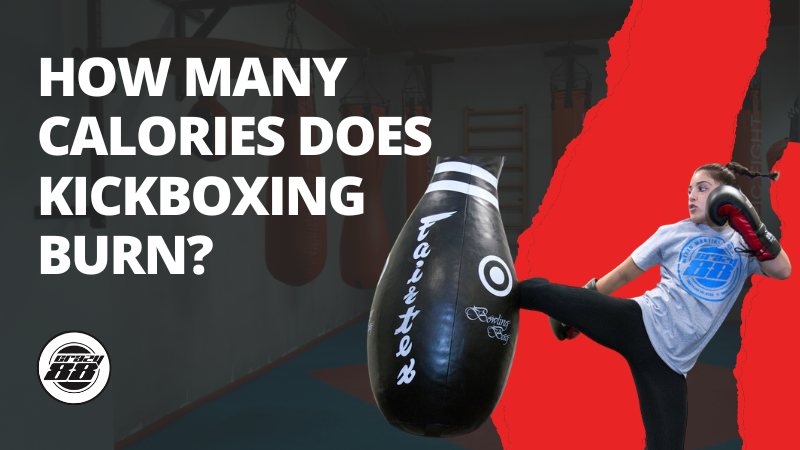
According to Harvard Health, kickboxing burns about 300 calories in 30 minutes for a 125 lb person, 360 calories for a 155 lb person, and 420 calories for a 185 lb person. In a full 60-minute class, that’s roughly 600 to 840 calories. Your exact burn depends on your body weight, how long you train, and how hard you work. It is important to know how many calories kickboxing can burn, as well as what you are eating, to support your training or weight loss plan.
Kickboxing Calorie Calculator
Enter your weight and class length to estimate your burn.
Class length
0
calories burned
Estimate based on Harvard Health data for kickboxing at vigorous effort. Actual burn varies with intensity, rest between rounds, and body composition.
Kickboxing Calories Burned Chart (Harvard Health Data)
| Body Weight | 30 Minutes | 45 Minutes | 60 Minutes | Per Minute |
|---|---|---|---|---|
| 125 lbs (57 kg) | 300 | 450 | 600 | 10 |
| 155 lbs (70 kg) | 360 | 540 | 720 | 12 |
| 185 lbs (84 kg) | 420 | 630 | 840 | 14 |
| 215 lbs (98 kg)* | 480 | 720 | 960 | 16 |
| 245 lbs (111 kg)* | 540 | 810 | 1,080 |
Harvard Health lists kickboxing, grouped with judo and karate, at 300, 360, and 420 calories per 30 minutes for 125, 155, and 185 lb people.
*The 215 and 245 lb rows extend the same pattern and are estimates.
Quick formula: calories per 30 minutes ≈ (2 × your weight in lbs) + 50. A 170 lb person burns about 390 calories every 30 minutes.
These figures assume vigorous, steady effort. Real classes include instruction and rest between rounds, so your actual burn is usually somewhat lower.
How Many Calories Does a 45-Minute Kickboxing Class Burn?
Most kickboxing classes, including many franchise-style fitness classes, run 45 minutes. At that length, expect about 450 calories at 125 lbs, 540 at 155 lbs, and 630 at 185 lbs.
For example, a 214 lb person in a 45-minute kickboxing class burns about 715 calories. A 69 kg (152 lb) person burns about 355 calories in 30 minutes and 530 in 45.

How Many Calories Does a Kickboxing Class Burn?
Class type matters more than kickboxing style.
- Fitness kickboxing classes keep you moving nonstop: continuous bag rounds, pad work, and conditioning circuits. These land at the top of the chart. Our Kickboxing Bootcamp is built this way.
- Technical kickboxing and Muay Thai classes mix hard rounds with instruction and partner drilling. The per-minute burn is lower, but you’re building skills you can keep progressing for years. Our Muay Thai kickboxing classes follow this format.
Cardio Kickboxing Calories Burned
Cardio kickboxing, usually done on bags or in the air without partner contact, sits near the top of the chart because the pace rarely stops. Four things raise your burn in any class:
- Throw kicks, not just punches: Kicks work the legs and hips, the body’s largest muscles.
- Shorten your rest: Less time between rounds keeps your heart rate up.
- Hit with intent: Power on the bag burns more than going through the motions.
- Stay consistent: Three classes a week beats one exhausting class and a week off.
Kickboxing vs. Other Workouts: Calories Burned
Using Harvard Health’s figures for a 155 lb person over 30 minutes:
| Activity | Calories (155 lbs, 30 min) |
|---|---|
| Jumping rope, fast | 421 |
| Kickboxing | 360 |
| Swimming laps, vigorous | 360 |
| Boxing, sparring | 324 |
| Elliptical trainer | 324 |
| Running, 5 mph | 288 |
| High-impact aerobics | 252 |
| Weight lifting, vigorous | 216 |
| Walking, 4 mph | 175 |
Kickboxing outburns the elliptical, running at 5 mph, and most gym workouts minute for minute. Curious how it compares to CrossFit? See the end of the CrossFit debate.
How Many Calories Does Boxing Burn?
Harvard Health lists boxing sparring at 270, 324, and 378 calories per 30 minutes for 125, 155, and 185 lb people, or about 9 to 13 calories per minute. Kickboxing burns slightly more because kicks bring the legs into every exchange.
Boxing classes built around bag and pad work, rather than sparring, typically burn somewhat less than those figures. Learn the fundamentals in our guide to the 6 basic punches in boxing, or train in our boxing classes.
Kickboxing Workout Plan for Burning Calories
A calorie-focused kickboxing session follows a simple structure:
| Phase | Time | What You Do |
|---|---|---|
| Warm-up | 5 to 8 min | Jump rope, shadowboxing, dynamic stretches |
| Bag rounds | 18 to 24 min | 6 to 8 rounds of 3 minutes, with 1 minute of rest |
| Pad or partner combos | 8 to 10 min | Punch and kick combinations at high output |
| Conditioning finisher | 5 min | Sprawls, burpees, core work |
| Cool-down | 3 to 5 min | Light movement |
For weight loss, a strong weekly plan is three kickboxing sessions plus one or two days of strength training, with at least one full rest day.
Can Kickboxing Help You Lose Weight?
Yes. Weight loss comes from burning more calories than you eat over time, and kickboxing burns more per session than most gym workouts.
How Much Weight Can You Lose With Kickboxing?
A pound of body fat is roughly 3,500 calories. Three 45-minute classes a week at 155 lbs burn about 1,620 calories, or close to half a pound a week from training alone. Combined with consistent nutrition, many people lose more.
How Fast Can You Lose Weight With Kickboxing?
Most people notice changes in energy and conditioning within two to four weeks, with visible body changes over two to three months of consistent training. A steady pace of about 1 to 2 pounds a week is generally considered sustainable.
Does Kickboxing Burn Belly Fat?
Kickboxing burns fat across your whole body, including your midsection. No workout targets fat in one area, but kickboxing’s high calorie burn and constant core rotation make it one of the most effective options for overall fat loss.
Does Kickboxing Make You Gain Weight?
The scale can rise slightly in the first few weeks as your muscles hold extra water while adapting to new training, and as you build muscle. Track how your clothes fit and how you feel alongside the scale.
How Often Should You Do Kickboxing to Lose Weight?
Three to four sessions a week is the sweet spot for most people. It burns meaningful calories while leaving time to recover. If you tire quickly despite doing cardio, see why you keep getting gassed.

Other Benefits of Kickboxing
- Stress relief: a heavy bag is one of the best ways to burn off a hard day.
- Coordination and balance: combinations train your upper and lower body to work together.
- Real self-defense skills: unlike a treadmill, every class teaches something useful.
- Consistency: varied rounds keep training interesting, so people stick with it.
Try Kickboxing Free for 7 Days in Maryland
The chart gives you an estimate. The fastest way to find your real number is to take a class. Crazy 88’s Kickboxing Bootcamp is built for calorie burn: nonstop bag rounds, pad work, and conditioning, coached so beginners can keep up from the first class. If you want to learn real technique too, Muay Thai kickboxing gives you skills you can build on for years.
Contact us today to claim your free 7-day trial at one of our Maryland locations for kickboxing or MMA classes.
Frequently Asked Questions
How many calories does 30 minutes of kickboxing burn?
About 300 calories at 125 lbs, 360 at 155 lbs, and 420 at 185 lbs, according to Harvard Health.
How many calories does an hour of kickboxing burn?
Roughly 600 to 840 calories for most adults, depending on body weight and intensity.
How many calories does a 45-minute kickboxing class burn?
About 450 to 630 calories for people between 125 and 185 lbs. A 214 lb person burns about 715 calories.
Does kickboxing only burn 200 to 300 calories an hour?
No. Harvard Health’s data shows even a 125 lb person burns about 600 calories in an hour of vigorous kickboxing.
Does kickboxing burn belly fat?
It burns fat across your whole body, including your midsection. No exercise targets fat in one area, but kickboxing’s high calorie burn makes it effective for overall fat loss.

Related Articles